
Our children don’t need perfect photo-ops or curated gift baskets — but they do need to feel in-tune with the seasons…and with us.
When we take a moment to notice and celebrate how summer slowly transitions into fall — the cooler air in the mornings (yes, even in Austin), the earlier-setting sun, the way fall smells like change — we teach our children that we are part of the Earth’s reliable, consistent cycles, and we belong.
For a long time, I was an exhausted, overwhelmed mom who didn’t care too much what weather it was and saw seasonal traditions as a chore. But now that we moved to a Southern climate, and fall looks very different here – much warmer, no red leaves yet, and continued sunshine – I’m discovering just how much tuning in to my surroundings is helping me feel calm and grounded.
It's a good reminder that living seasonally gives us and our children a sense of consistency and trust that life moves in predictable cycles. That trust, in part, gives us a sense of safety that we all need to rest well at night.
Why seasonal rhythms matter for kids’ emotional safety
I see our holidays and cultural habits as an additional layer of safety – they’re there to remind you that it’s time to mark the end or beginning of a certain chapter. Depending on where you live, seasonal changes might be subtle, but that shouldn’t stop you from creating delightful traditions to celebrate the passage of time. For millennia, humans have marked it with festivals, rituals, feasts and traditions – all ways to be connected with nature AND the community. They would come together and feel joy and gratitude for having had bountiful harvest and favorable summer rain, and feast before preparing for winter.
It’s no surprise that we – collectively – continue to visit the pumpkin patch, go apple picking, or share a pecan pie with our neighbors. All of these things are communal experiences that helps us feel a sense of togetherness. And to the primate parts of our brains, community always means protection and survival in hard times.
If our kids feel safe and connected to the adults in their lives, they are WAY more likely to sleep well at night…by paying attention to the seasons and the traditions that come with them, we’re filling our children’s cups with so much connection and safety, they don’t need to get up at night to seek it.
Simple fall traditions to help kids feel grounded
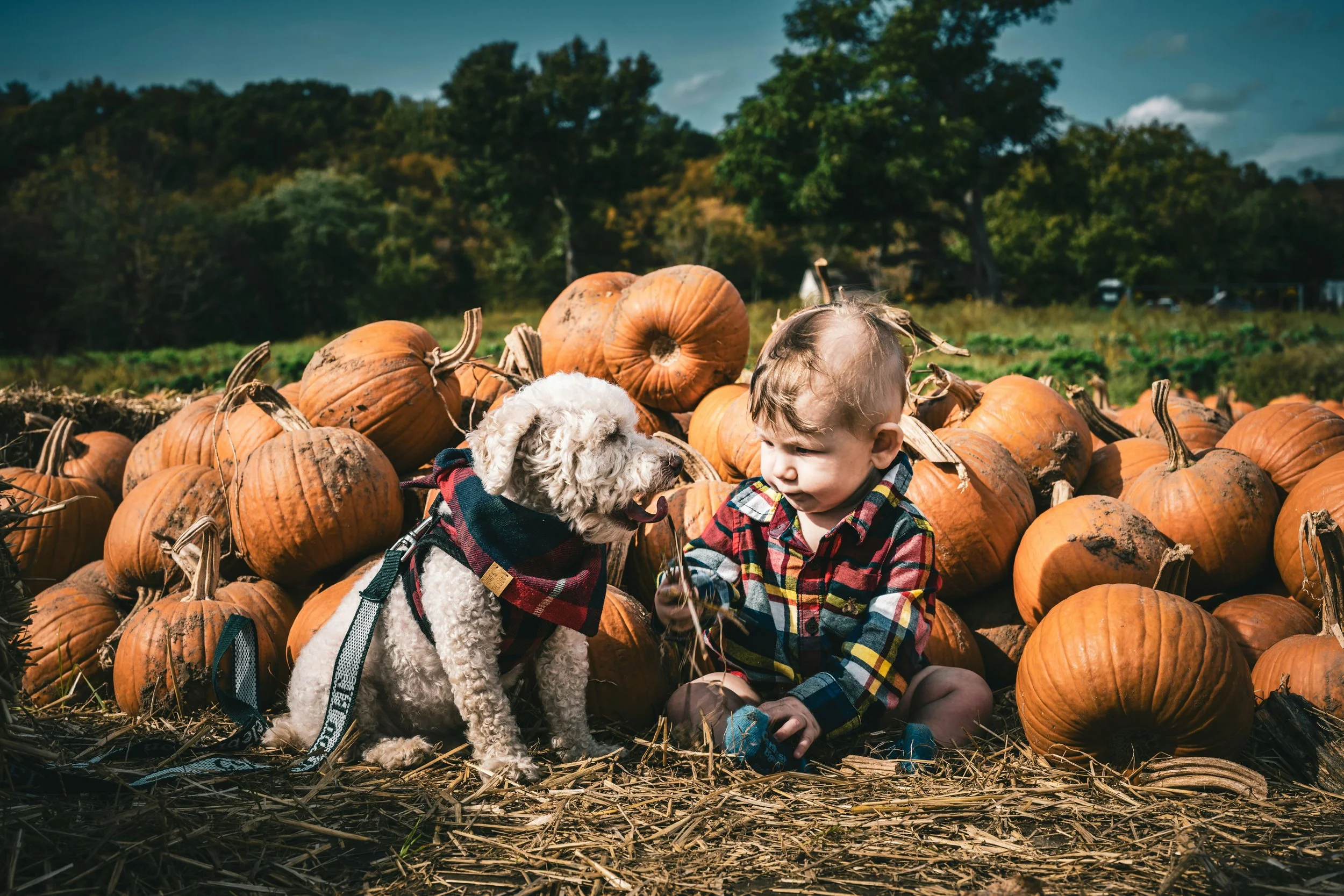
I try to lead a simple, minimalist life as much as possible (though it’s hard with kids!), and I truly do believe that kids will love any tradition, no matter how simple, as long as you’re part of it.
Here are some simple ideas to mark the transition to fall in your home – these work just as well for babies – involve them in everything!
Grab some funky-looking gourds at the grocery store and ask your kids what they think the gourds look like (for babies, you would help answer for them – do you think this looks like an old man’s nose, or a giant rain drop?). Then let your kids find a place in your home to display them.
Seasonal produce will likely be prominently displayed at your grocery store – grab some butternut squash and either bake with cinnamon and pecans, or turn it into an easy blended soup (babies under 6 months likely wouldn’t be having the soup, but they can watch you make it and listen to your explaining what you’re doing). The aroma will fill your home for days.
Next time you’re out for a walk, ask your kids what they’ve noticed has changed. Did the leaves turn red or brown or stay green? It’s fun to make bracelets with thick tape (with the sticky part facing out) and then have the kids stick their favorite nature treasures onto it as your family walk progresses.
Baked apples with some cinnamon, butter and sugar are an easy dessert that has the most comforting scent. Discuss which type of apple everyone in your family prefers – Pink Lady, Granny Smith, Cortland or something else? Obviously apples may need to be cooked and mashed for your baby, but it counts!
Fresh seasonal flowers are typically affordable and a great way to brighten up your space AND serve as art inspiration. Can your kids draw or paint the yellow mums you bought? If your kids are little, maybe they can play with a few of the flower buds to get up close and personal with the scent and texture? The more we can engage their senses with nature treasures, the better.
Next time you go to the library, pick up a few of the seasonal book picks and read them at bedtime.
How seasonal patterns help children sleep better
When children see these simple things coming back every time summer ends – the books, the apples and pecans, the pumpkin patches and Halloween – they begin to see that the world is predictable and steady. No matter what is going on – the next season will undoubtedly come.
At the end of the day, it’s not what you’re doing, it’s who you’re doing it with – and the fact that it forces you to be present. I think the key for busy adults (including myself) is to slow down and find joy in the everyday delights – crunchy candied pecans or the way the afternoon light falls on your bookshelf. You need to be right here, right now, to notice that.
Experiencing wonder and joy together acts like emotional glue. And when children feel connected to you, they know they will be taken care of – their nervous system relaxes, and you’ll see less resistance at bedtime, fewer wakes, and more rest for all.
Want support creating rhythms that nurture sleep and connection?
If you’re feeling overwhelmed trying to find balance between schedules, sleep, and connection — you don’t have to do it alone.
I offer holistic sleep support that honors your child’s attachment needs, your family’s values, and the natural rhythms of your life.
Together, we can create the right conditions to help your child feel safe, seen, and ready to rest — in every sense of the word.